
Robotic Surgery for Colorectal Cancer: What You Should Know
- Written by: Dr Mark Wong
- Reading Time: 5 minutes

Dr Mark Wong MBBS, M.Med, FRCSEd, FAMS
Facing a colorectal cancer diagnosis can be overwhelming, but advancements in robotic surgery are transforming the way we treat this condition. Robotic surgery is a minimally invasive technique that is increasingly used in the treatment of colorectal cancer. It may offer benefits such as smaller incisions, reduced post-operative pain, and shorter hospital stays compared to traditional surgery.
Table of Contents
Introduction
A diagnosis of colorectal cancer can be life-changing, and while traditional treatments are effective, they often come with longer recovery times and a higher risk of complications.
Robotic surgery is changing the way we treat colorectal cancer. This minimally invasive technique offers precise control, clear imaging that supports accurate surgical work, smaller incisions, resulting in less pain, fewer complications, and faster recovery. It provides an option that can help reduce complications in selected cases.
As a surgeon, I’m proud to offer this innovative approach, helping patients achieve better outcomes with greater comfort and confidence.
Understanding Colorectal Cancer
Colorectal cancer begins in the large intestine (colon) or rectum and often starts as small, noncancerous growths called polyps. Some polyps can become cancerous as they grow over time.
Risk factors include age, a family history of colorectal cancer, diets high in processed meats, and lack of physical activity. Common symptoms are changes in bowel habits, rectal bleeding, abdominal pain, or unexplained weight loss.
In many cases, especially in the early stages, there are no symptoms. This makes regular colonoscopy screenings essential. Colonoscopy not only detects potentially cancerous polyps for removal but also identifies early-stage cancer when it is more treatable and outcomes are significantly better.
Diagnosing Colorectal Cancer
A colonoscopy is the gold standard for diagnosing colorectal cancer. It allows us to examine the colon and rectum thoroughly and take biopsies of any suspicious areas during the same procedure.

Treatment Options for Colorectal Cancer
Surgery is the primary treatment for colorectal cancer. It involves removing the affected portion of the colon or rectum and reconnecting the healthy sections to restore normal function. Chemotherapy and radiotherapy are typically reserved for more stages of the disease.
Laparoscopic (keyhole) surgery has become the standard of care for colorectal cancer. Using smaller incisions than open surgery, it reduces pain and speeds up recovery for patients.
For certain cases, robotic surgery offers additional benefits over conventional laparoscopic techniques. Robotic surgery combines the minimal invasive nature of laparoscopic techniques with enhanced visualization and control, resulting in greater precision and may help support post-surgical for many patients.
What is Robotic Surgery?
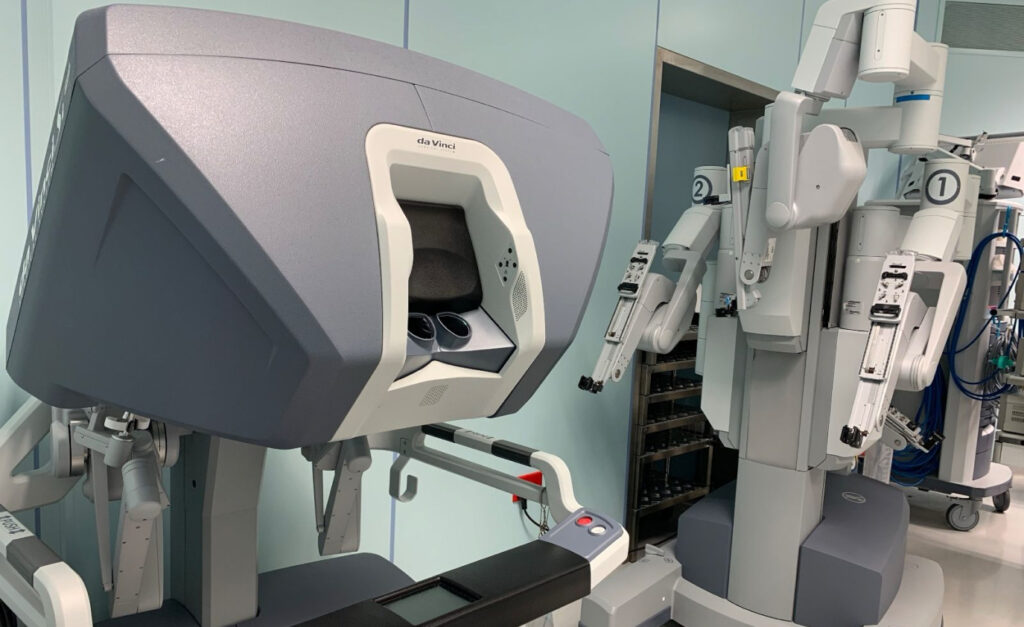
Robotic surgery is an minimally invasive technique that uses a system of robotic arms, a surgeon console, and a high-definition 3D camera. From the console situated within the operating room a few feet from the patient, I control the robotic arms and camera, which translate my movements into smaller, more precise actions, enhanced by a high-definition 3D imaging system.
This technology provides greater maneuverability, improved visualization, and provides maneuverability and high surgical accuracy. It is particularly effective for delicate and complex procedures, such as surgeries for rectal and left-sided colon cancers, performed in tight or confined spaces.

Benefits of Robotic Surgery for Colorectal Cancer
Robotic surgery provides numerous advantages over conventional laparoscopic, including:
- Enhanced Precision: The robotic system allows for greater control as it replicates the 7 degrees of motion of the human wrist, enhancing the safety and completeness of cancer clearance during surgery.
- Improved stability: The stable robotic platform ensures there are minimal unintended movements, and fatigue is never an issue. This helps to enhance safety and improves operative precision.
- Clear 3D Visualization: High-definition 3D cameras provide an improved and magnified view of the surgical site, ensuring accuracy even in narrow spaces and complex procedures.
- Functional Outcomes: Robotic surgery has been shown to shorten hospital stays and enhance functional outcomes, including sexual, urinary, and bowel function. This leads to smoother recoveries and overall better results for patients.
Why Choose Dr Mark Wong for Robotic Colorectal Cancer Surgery?

A colorectal cancer diagnosis can be daunting. As a Senior Consultant and Adjunct Assistant Professor, I focus on minimally invasive techniques such as robotic and laparoscopic surgery. My training includes fellowships in France and Denmark, equipping me to manage both standard and complex colorectal cases using these approaches.
My expertise is backed by years of specialized training, including an accredited by Ministry of Health fellowship in Minimally Invasive Colorectal Surgery, completed in France and Denmark. This training enables me to handle even the most complex cases with precision and care. I am also actively involved in the medical field, regularly speaking at international conferences and serving on hospital medical advisory boards.
At Mark Wong Surgery, we aim to provide care in a patient-friendly environment. For Indonesian patients, we provide a dedicated Bahasa-speaking staff and 24/7 WhatsApp support, ensuring seamless care. Together, we’ll guide you through your treatment journey with personalized care, empathy, and a strong commitment to your well-being.
Preparing for Robotic Colon Cancer Surgery
Preparation is a vital part of ensuring a smooth surgical experience, and I’ll be with you every step of the way.
During your consultation, I’ll review your medical history, explain the surgical plan, and outline steps to prepare for the surgery. This includes recommendations for adjusting medications, as well as dietary and activity guidelines. If needed, you may also meet with a cardiologist and anesthetist to ensure you’re in the best condition for surgery.
We’ll also address any concerns you have, discussing recovery timelines, potential risks, and expected outcomes. My goal is to make sure you feel informed, supported, and confident as we prepare for your procedure together.
What to Expect During and After the Procedure
During robotic colorectal cancer surgery, small incisions are made to insert robotic instruments and a high-definition camera. From a console, I control the robotic arms to remove cancerous tissue with precision. The procedure typically lasts up to 4 hours.
After surgery, you’ll be monitored in the recovery area, and pain management will begin right away. Most patients are able to walk within 24 to 48 hours and experience less discomfort compared to traditional surgery.
Hospital stays usually last 3 to 5 days. You can resume light activities within 2 to 3 weeks, with full recovery expected in 4 to 6 weeks. Follow-up visits at my clinic will ensure your wounds are healing properly and your recovery stays on track.
Potential Risks and How They Are Managed
Like any surgery, robotic colorectal cancer surgery carries risks such as bleeding, infection, or anesthesia-related complications. However, the precision of robotic systems significantly reduces these risks.
Smaller incisions lower the risk of infection and promote faster healing, while enhanced visualization and tremor-free control improve accuracy, minimizing the chance of complications.
To ensure your safety, I prioritize thorough preoperative preparation, including detailed assessments and optimizing your health. During the procedure, advanced monitoring and expert care are in place to reduce risks further.
After surgery, you’ll receive close monitoring in the hospital, effective pain management, and early physiotherapy to aid recovery. Regular follow-ups after discharge ensure you heal smoothly and stay on track for a full recovery.
Frequently Asked Questions (FAQs)
- What are the benefits of robotic surgery for colorectal cancer?
Robotic surgery offers greater precision, stability and magnification, especially in narrow confined spaces and complex cases, compared to traditional laparoscopic (key-hole) surgery. - Am I a suitable candidate for robotic surgery?
Most patients are eligible, but I’ll evaluate your medical history and condition during a detailed consultation to determine suitability. - How long is the recovery after robotic colorectal cancer surgery?
Full recovery typically takes 4–6 weeks, with light activities resuming within 2–3 weeks. Hospital stays are shorter, around 3–5 days. - What risks are associated with robotic surgery?
Risks include bleeding and infection, but these are minimized due to the precision, stability and minimally invasive nature of the robotic technique.
Robotic surgery reflects development in laparoscopic (keyhole) surgery, offering precision, faster recovery, and less discomfort. Combined with my expertise, you’ll also receive personalized, compassionate care tailored to your needs.
If you’re considering robotic surgery, contact our Indonesia office today. Contact our Indonesia office to learn more about robotic options for colorectal cancer treatment.